
Why Productive Struggle Works
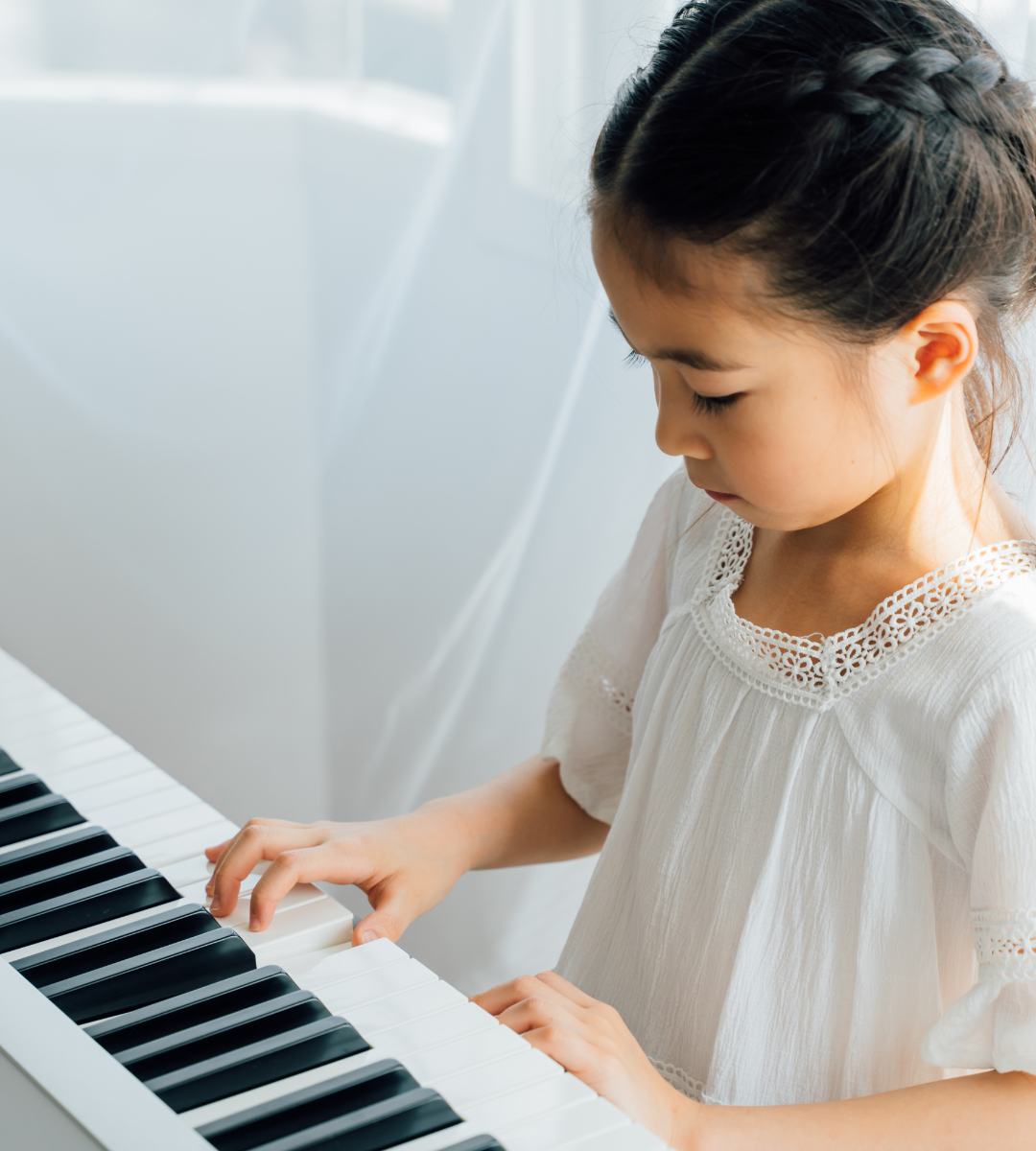
Music performance requires an extraordinary interaction between auditory and motor systems. When we perform music, the brain plans and coordinates movements while simultaneously processing their sensory consequences. Research into musical performance has demonstrated the importance of these tightly connected auditory and motor processes (Zatorre, Chen & Penhune, 2007).
This helps explain the first part of productive struggle:
TRY → NOTICE → CHANGE.
Motor-learning research shows that the nervous system can use differences between predicted and actual sensory outcomes to update future actions. These sensory prediction errors are an important mechanism in motor adaptation (Shadmehr, Smith & Krakauer, 2010).
For the music learner, the process can be remarkably immediate. I expected that note. I heard this note. They don't match. What needs to change?
The mistake is therefore not simply a failure. It can become information for the next attempt.
Repetition is most useful when something changes
This is why TRY AGAIN does not simply mean “repeat it”. The student notices what happened, adjusts something and tests the new attempt. Perhaps they change a movement, slow the tempo, isolate two notes or direct their attention towards one particular sound.
Research into motor learning also reminds us that performance during practice and actual learning are not necessarily the same thing. Conditions that make practice look immediately successful do not always produce the strongest longer-term retention. Some challenge during practice can support later learning (Kantak & Winstein, 2012).
This fits with the broader concept of desirable difficulties: appropriately designed challenges can require learners to engage more actively in processes that support durable learning (Bjork & Bjork, 2011).
Music learning changes with experience
Music provides an especially rich environment for this process because it combines repeated auditory, motor, sensory, attentional and cognitive demands. Reviews of the neuroscience of musical training describe it as a valuable model for understanding experience-dependent brain plasticity, with training associated with functional and structural changes in the brain (Herholz & Zatorre, 2012).
Longitudinal research with children has also found structural brain changes following instrumental training that correlated with improvements in relevant auditory and motor skills (Hyde et al., 2009).
Finally comes COME BACK. Learning is not confined to what happens during the practice session. Motor memories develop across time, and research distinguishes immediate practice performance from the longer-term retention that provides better evidence of learning (Kantak & Winstein, 2012).
Productive struggle therefore gives persistence a different meaning. Persistence is not doing the same thing over and over until it works. It is staying engaged with the learning process: trying, noticing, adapting, checking and returning.
For young musicians, perhaps one of the most important things we can teach is not simply “keep going”, but “here is what you can do next.”
References
Bjork, E. L., & Bjork, R. A. (2011). Making things hard on yourself, but in a good way: Creating desirable difficulties to enhance learning.
Herholz, S. C., & Zatorre, R. J. (2012). Musical training as a framework for brain plasticity: Behavior, function, and structure. Neuron, 76(3), 486–502.
Hyde, K. L., et al. (2009). Musical training shapes structural brain development. Journal of Neuroscience, 29(10), 3019–3025.
Kantak, S. S., & Winstein, C. J. (2012). Learning-performance distinction and memory processes for motor skills: A focused review and perspective. Behavioural Brain Research, 228(1), 219–231.
Shadmehr, R., Smith, M. A., & Krakauer, J. W. (2010). Error correction, sensory prediction, and adaptation in motor control. Annual Review of Neuroscience, 33, 89–108.
Zatorre, R. J., Chen, J. L., & Penhune, V. B. (2007). When the brain plays music: Auditory-motor interactions in music perception and production. Nature Reviews Neuroscience, 8, 547–55