

Research Updates

Here at Bigger Better Brains we believe that through educating yourself, you can then educate and affect positive change in your community.
With all of the research in the field of neuromusical science, our BBB Research section serves as a content hub for you. We regularly share findings and break down the latest research to educate and inspire discussion. We hope you enjoy this page on our website and share BBB news with your colleagues, parents and students.

Joint music-making leads to more helping behaviour in 18-month olds
It may seem strange to think of a childcare centre that does not use music in some way. We know about the many cognitive skills that interaction with music can create for your children, but why do we have music in the first place?

Does music participation teach sharing?
Did you know there are many types of sharing? When you stop and think about it, there are many ways we can share a toy or food, but most of the time, as parents or educators, we would say something like “Let’s just be nice and share.”

Which is better – learning one instrument or many?
Music programs often grapple with a big question: Should we give our students a variety of experiences learning different instruments, or should we get them to focus on learning and eventually mastering just one instrument?

How does drumming assist school children diagnosed with autism?
In this study, they found that 10 weeks of rock drum kit improved dexterity, rhythm, timing and the ability to maintain attention for children with autism.

Music fine tunes the autistic brain!
Autism research, as well as ADHD, dyslexia and auditory processing disorder research, are using music processing and music learning as a tool to better understand each condition.

Dyslexia is a hearing issue, not a reading issue!
Prof Usha Goswami found that “dyslexia is not caused by children reading words incorrectly, but instead, by their inability to hear the rhythm of words when they are being spoken.”

Rhythm and dyslexia
Have you ever wondered what the connection between music and dyslexia might be? Researchers in Italy have provided a good description of the connection.

Helping ADHD students through music learning
This summary could be very helpful for understanding the learning challenges faced by ADHD students in your music ensemble or classroom and also give you ideas on specific activities for focus or to help improve their skills.

Music learning is a full brain workout!
The different types of connectivity are ultimately what makes every human unique. For children and adults with autism, it has been identified that the auditory and visual areas of their brains are highly connected.

Neural Biomarkers for Dyslexia, ADHD, and ADD
The researchers built on top of the research that found that music learning could improve these “traffic black spots”. Hence, they used a music learning intervention to see if they could track changes in the auditory cortex and hemispheric activation in children with Dyslexia, ADHD and ADD.

Rhythm can predict risk of language disorders
Here is a fascinating new theoretical paper about the relationship between rhythm and language abilities. A theoretical study is one that brings together all the relevant current research and puts forward a theory of, in this case, how two concepts may be connected.

Dyslexia, beta waves and rhythm processing
Dyslexia, beta waves and rhythm processing – that is a mouthful of tricky words. But in this new study, they are all connected and could reveal new understandings about the brain mechanisms that cause dyslexia.


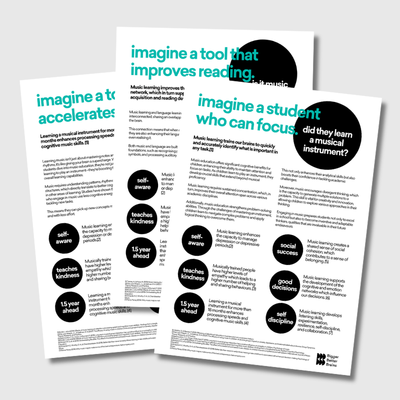
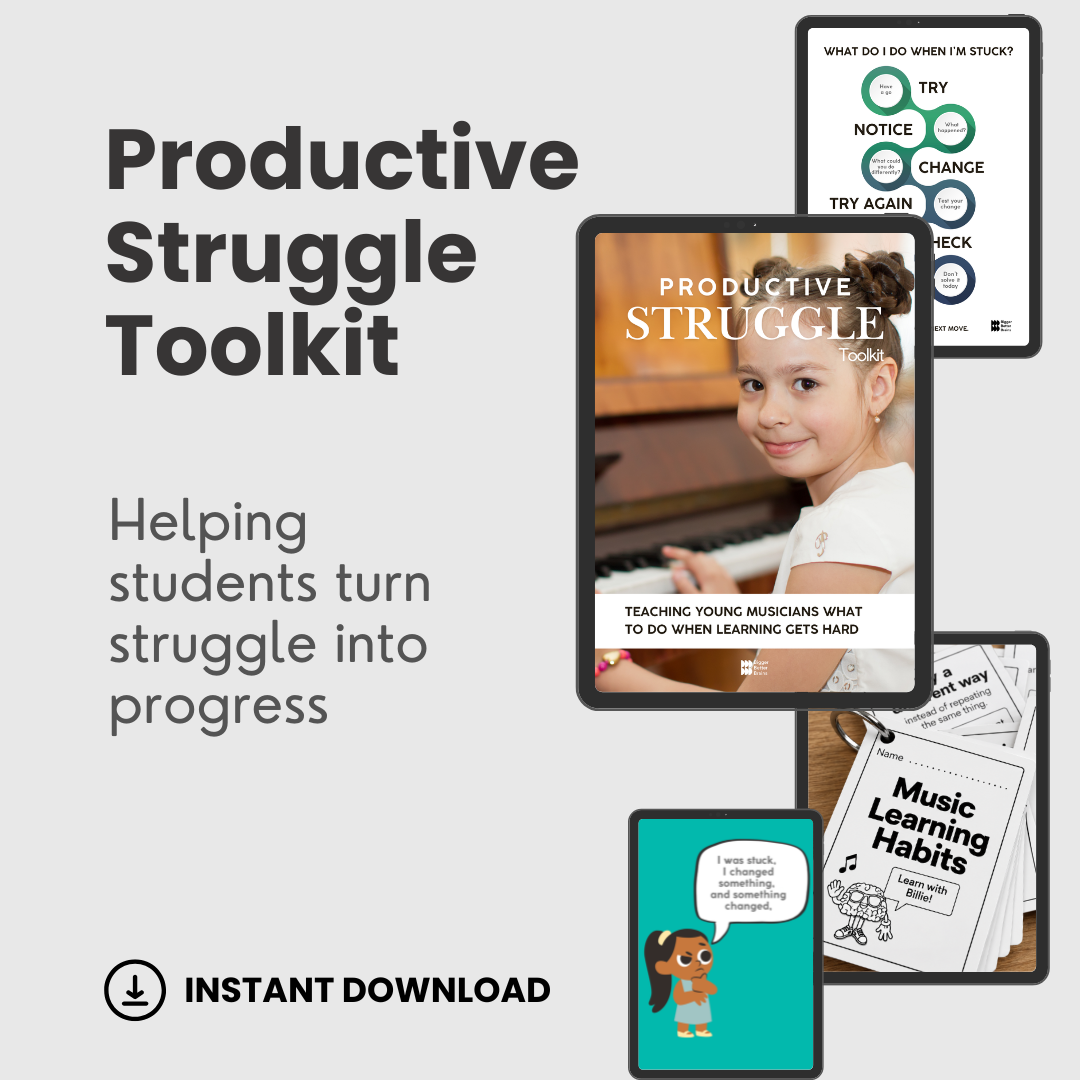
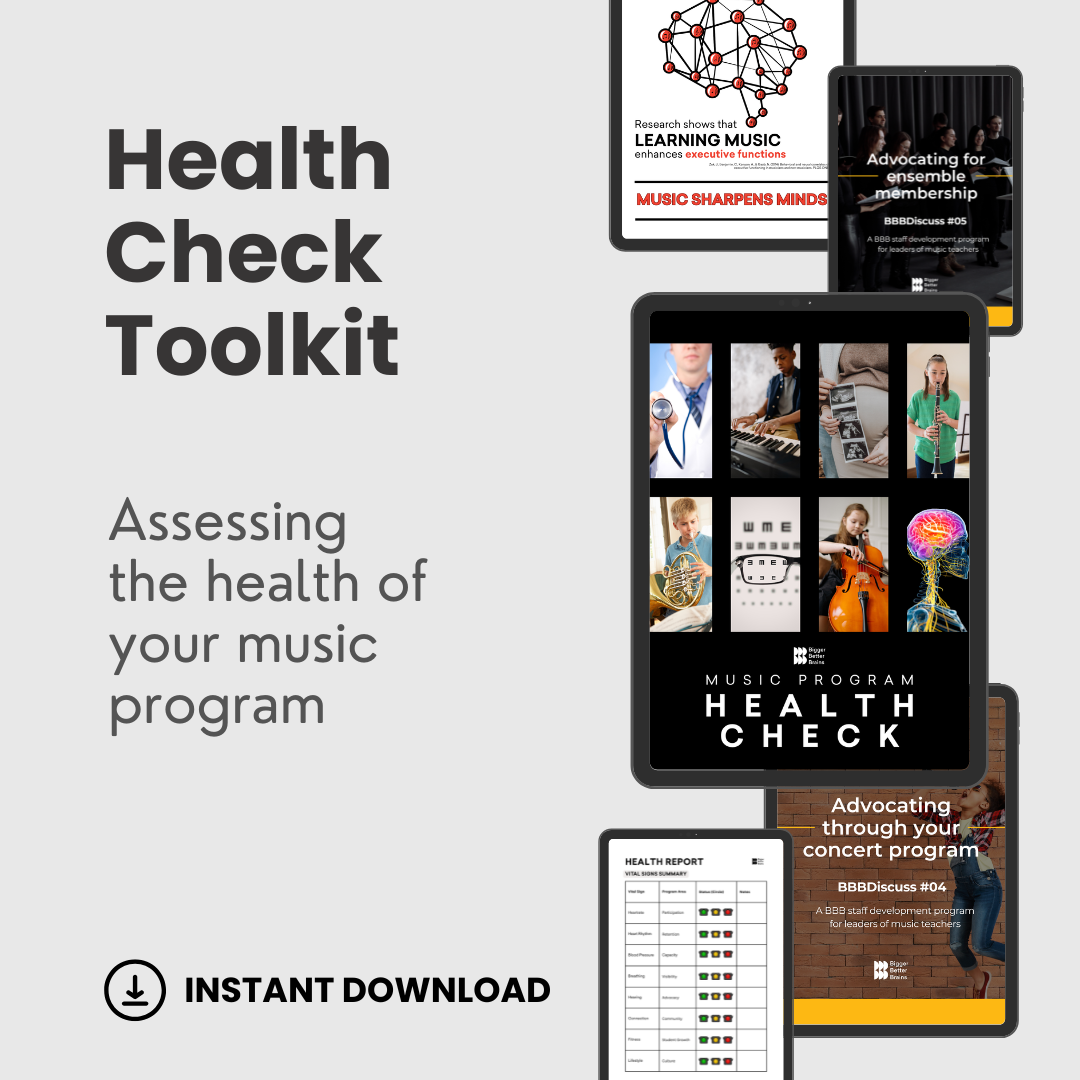

The evidence behind everything you teach, in one book
From Dr Anita Collins, music educator and creator of the TED-Ed video watched 17+ million times, translating the world's neuroscience research into the case for music education and the strategies to bring it into your teaching.
You already know music changes your students. The Music Advantage gives you the research that proves it. Because Anita explains the science through real-life stories, it reads like a good conversation rather than a textbook. Use it to advocate for your program, win over parents and leadership, and sharpen what you do in the classroom.
WHAT YOU GET
The complete book, 260 pages
Easy to read: the neuroscience explained through real classroom and family stories
Practical strategies you can apply across any age you teach, from birth to the teenage years
CHOOSE YOUR EDITION
Global edition: for readers outside the US
US edition: US terminology and examples
Signed copy: personally signed by Dr Anita Collins [while stocks last]
HOW TEACHERS USE IT
Advocacy: make the evidence-based case to school leadership for funding and keeping your program
Parent conversations: answer "is it really worth it?" with authority at enrolment and parent nights
In the classroom: practical strategies, from clapping to help a struggling reader, to ensemble play for concentration and social skills
Professional development: deepen your grasp of the "why" behind your teaching, or read it as a department
WHY IT WORKS
Written by Dr Anita Collins and grounded in research from leading neuromusical scientists worldwide, so when you make the case for music you are standing on the science, not opinion. And the real-life stories mean you will actually enjoy reading it.
"This book is my bible. I have so many highlights and pages flagged that I can use with parents and for quotes in emails." Kirsten, Music Teacher.
COMMON QUESTIONS
Which edition should I choose? Global for outside the US, US edition for US spelling and examples.
Is it a hard read? Not at all. Anita uses real-life stories to make the science clear and enjoyable.
What ages does it cover? Birth to the 18 years, useful whatever level you teach.
Add to cart NOW. Put the evidence for music behind your program today.
KEEP THE ADVOCACY GOING
BBB+ gives music teachers everything they need to make the case for music all year round:
A new advocacy toolkit every month
A library of 500+ tools and resources
Exclusive student exercises and advocacy materials
Member discounts
See what members get HERE