

Research Updates

Here at Bigger Better Brains we believe that through educating yourself, you can then educate and affect positive change in your community.
With all of the research in the field of neuromusical science, our BBB Research section serves as a content hub for you. We regularly share findings and break down the latest research to educate and inspire discussion. We hope you enjoy this page on our website and share BBB news with your colleagues, parents and students.


Stealth Advocacy is The Quiet Power of Repeating Your Message
This blog explores the quiet power of Stealth Advocacy, subtle, repeated messages that shape how others see music education. From hallway posters to one-liners in newsletters, these small signals work in the background, shifting mindsets over time. If you’re too busy to launch a campaign, this is the kind of advocacy that speaks for you, even when you’re not in the room.

Are We Too Busy Doing to Tell the Story of What We Do?
This blog invites music educators to slow down just enough to notice and name the everyday moments that show the power of music learning. From quick chats with parents to check-ins with students or school leaders, these small interactions are golden opportunities to advocate for music education.

Advocacy starts with the student
In our drive to advocate for music education, it’s easy to focus on public performances, programs, or policies. But real advocacy often begins in quiet moments with students, their stories, and their shifting motivations. This blog explores how listening, noticing, and building trust can turn everyday teaching into powerful, student-centered advocacy.

How Can We Make Music Advocacy a Daily Habit, Not Just an Event?
What if music advocacy wasn’t an event, but a habit?
In the bustle of rehearsals, lessons, and emails, advocacy often gets pushed to the margins. But what if we made it part of our everyday teaching language? This post shares four simple ways to weave music advocacy into daily practice, from quick phrases and bold visuals to shared reflections with colleagues. Small actions, repeated often, can shift how music learning is seen and valued.

Friends Who Play Together, Stay Together
Making music together does more than build skills—it builds friendships.
Research shows ensemble experiences activate empathy and connection, helping students feel they belong. From choirs to community bands, music is where friendships grow.

Support Student Curiosity Anytime, Anywhere.
Founder of Bigger Better Brains, Dr Anita Collins, receives hundreds of emails from students around the world asking questions about neuromusical research. So she decided to record a short video about the most asked questions she has received.

Can the right music help students with ADHD focus better?
We often assume background music helps students concentrate—but new research suggests it’s not one-size-fits-all, especially for learners with ADHD. This study explores how different sounds—classical, preferred music, binaural beats, and medication—affect focus. The takeaway? Familiar, enjoyable music may support attention better than trendy brain hacks. What could this mean for your classroom or studio?

How Music Learning Supports Sound Processing in Neurodivergent Learners
What if music could help neurodivergent students focus, listen, and communicate more easily? Music learning strengthens how the brain processes sound, supports attention and memory, and helps students filter speech in noisy settings. For learners with ADHD, autism, or sensory challenges, it offers a structured, motivating way to build essential skills.

When Music Makes the Grades
A 2020 study from Brazil found that kids aged 8–12 who joined twice-weekly group music sessions outperformed their peers in reading, writing, and math. They also showed better attention and memory. Led by Projeto Guri, the program proves what many music educators feel: consistent, inclusive music-making fuels broader learning.

The Brain Behind the Beat: What Musical Anhedonia Teaches Us
Some students don’t light up when the music soars—and it’s not about effort or attitude. Neuroscience is uncovering how individual brain wiring can shape emotional responses to music, including a rare condition called specific musical anhedonia. As educators, this challenges us to broaden our lens: what if joy in music doesn’t look the same for everyone?



Help students manage school stress through music learning
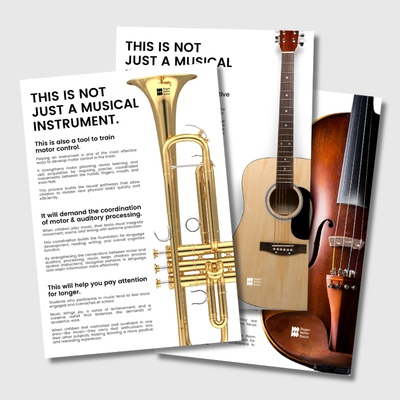
A practical toolkit that helps music teachers show students how music-making can support stress management, motivation and wellbeing during exams, assessments and other demanding school periods.
When exam season arrives, music rehearsals and practice are often the first things students put on hold. With assignments, revision and academic pressure building, music can start to feel like something they simply don't have time for.
But what if music-making could be part of how students manage that pressure?
The School Stress Toolkit gives music teachers ready-to-use, research-informed resources to help students understand the connection between music learning, the brain and stress. From stress regulation and motivation to social connection and cognitive engagement, the toolkit explores why continuing to make music can be valuable during demanding academic periods.
Use these resources to start conversations, advocate for the importance of music learning and encourage students to keep music part of their study routines.
WHAT YOU GET
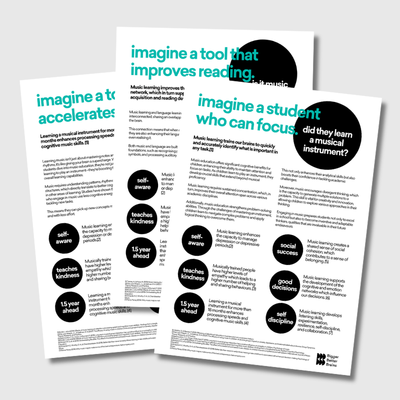
10 Music Learning Helps School Stress Shareable Images + Printer-Friendly Versions – ready-to-share advocacy messages highlighting how music learning can support students during stressful school periods. Share them with parents, school leaders and your wider school community.
16 Music Learning Helps School Stress Digital Posters – research-informed visuals exploring how music-making can support stress regulation, motivation, social connection and cognitive engagement. Display them in classrooms, rehearsal spaces or across your school's digital channels.
2-page Tuning Up Our Brain for the Test Teacher Development Resource – explore the science behind how music-making may support stress management and exam preparation, with research to help advocate for keeping students engaged in music during assessment periods.
2-page School Stress Worksheet for Students – a practical reflection activity that helps students identify stress, explore how music-making can support their wellbeing and consider ways to manage academic pressure.
WHAT IT HELPS YOU DO
Help students understand how music-making can support stress management
Explain the science behind music learning, cortisol and the body's stress response
Explore how musical achievement engages the brain's reward and motivation systems
Highlight the benefits of group music-making for social connection and wellbeing
Encourage students to keep music part of their study routines during exam season
Start meaningful conversations about stress, wellbeing and academic pressure
Give students opportunities to reflect on their stress and explore practical strategies
Advocate for the value of music rehearsals and lessons during assessment periods
Share research-informed messages with parents, teachers and school leaders
Reinforce that music learning can be part of managing school stress, not simply another commitment competing with study
HOW TO USE IT
Bring the science of music and stress into your classroom, rehearsals and school community.
Use the digital posters and shareable images to start conversations about how music-making can support students during stressful academic periods. Display them around your school, share them through newsletters or use them to advocate for continued participation in music learning.
Explore the Tuning Up Our Brain for the Test resource to strengthen your understanding of the research and help explain why attending music rehearsals can be valuable during exam season.
Then, introduce the School Stress Worksheet for Students to encourage students to reflect on how they're feeling, recognise their stress responses and consider how music-making could fit into their own stress-management routines.
WHY IT WORKS
During exam season, students often feel they need to spend every available moment studying. But managing academic pressure involves more than simply increasing study time.
Research suggests music-making can support several processes involved in managing stress and maintaining wellbeing.
Enjoyable musical activities may help regulate the body's stress response, while musical achievement engages brain networks associated with reward and motivation. Group music-making can also strengthen social bonds and feelings of belonging, offering valuable opportunities for connection during demanding school periods.
By understanding these benefits, students can begin to see music learning differently, not simply as another activity on their schedule, but as something that may support them through academic challenges.
Exam season doesn't have to mean putting music learning on hold.
COMMON QUESTIONS
What is the School Stress Toolkit? It's a collection of research-informed digital resources designed to help music teachers explain how music learning can support students during stressful school periods.
Who is this toolkit for? Music teachers, instrumental teachers, ensemble directors and music education advocates who want to support students and communicate the value of music learning during exams and assessments.
What ages can I use it with? The resources are particularly relevant to secondary school students navigating academic pressure, but many can be adapted for other age groups.
Does music-making reduce stress? Research suggests certain musical activities can support stress regulation, with some studies finding reductions in cortisol. Individual responses vary, and music-making is one potential strategy for managing stress.
How can I use the digital posters? Display them in classrooms and rehearsal spaces, incorporate them into lessons or share them digitally to communicate the science behind music learning and stress.
What is the School Stress Worksheet for Students? It's a 2-page reflection resource that helps students recognise their stress, explore how music-making may support their wellbeing and consider practical stress-management strategies.
Can I share resources with parents and school leaders? Yes. The toolkit includes 10 shareable advocacy images with printer-friendly versions to help communicate the value of music learning throughout your school community.
Is this a digital product? Yes. The toolkit is an instant download with digital and printer-friendly resources.
Add to cart NOW. Help students discover why music learning matters, especially during exam season.
LOVE THIS TOOLKIT? GET A BRAND-NEW ONE EVERY MONTH
This toolkit is $50 on its own. BBB+ Premium Toolkit and Premium Annual members receive a brand-new toolkit straight to their inbox free every month, plus access to over 500 evidence-based resources.
Join as a Premium Toolkit member for $60 a year, just $5 a month, and get a new toolkit every month plus the full resource library. That is less than the cost of two standalone toolkits for a whole year of support.
Want everything BBB+ offers? Premium Annual is 50% off right now.
Become a BBB+ Premium Toolkit member today CLICK HERE
Get 50% off Premium Annual CLICK HERE