

Research Updates

Here at Bigger Better Brains we believe that through educating yourself, you can then educate and affect positive change in your community.
With all of the research in the field of neuromusical science, our BBB Research section serves as a content hub for you. We regularly share findings and break down the latest research to educate and inspire discussion. We hope you enjoy this page on our website and share BBB news with your colleagues, parents and students.

Boost your child's reading skills in just 10 minutes a week
10 minutes of music learning a week for 10 weeks can improve reading skills for poor readers.

Rhythm and Reading
This brand new study with beginner readers (aged 5-7) found a whole swag of connections, concluding that “rhythm skills and literacy call on overlapping neural mechanisms, supporting the idea that rhythm training may boost literacy in part by engaging sensory‐motor systems”.

Is there a new way to think about language (and music) development?
The capacity for language is distinctly human. It allows us to communicate, learn things, create culture, and think better. Because of its complexity, scientists have long struggled to understand the neurobiology of language.

Can second language ability be predicted through music?
While musicality and working memory are mostly treated as clear predictors of foreign language learning ability, the relationship between brain morphology and language aptitude is far from obvious.

Rhythm is a multidimensional skill set
To keep a beat, our brains have to get the auditory and motor cortices to first synchronise and then maintain that synchronisation as small things change in the music. To maintain a rhythm, our brains need to do all of that plus constantly monitor how the rhythm is fitting into the beat. It looks easy, however, it is very hard.

Music learning can change the educational life for disadvantaged students
Music has been used as an intervention around the world to help students, and inevitably whole communities, who are living in challenging circumstances.

Little ears are listening: How babies learn to talk before they’re even born
This article is packed with fantastic research from the MARCS Institute in Sydney, Australia. It is vital to study the first developmental steps in all areas of life.

Music learning increases pre-reading skills and vocabulary
The results of this study found that early childhood music training can lead to associated improvements in both musical skills and language skills!

Language is music to a baby’s brain
In this study, they found that 9-month-old babies who had one month of exposure to directed music listening improved not only their auditory processing of music but also their language!

Musical play is a must for preschoolers
What is musical play? Is it bashing on an upturned drum in the playground or banging pots and pans on the kitchen floor? Well, it can be both.

Auditory roots of literacy skills
Here is a great article to take along to your next staff meeting or use as a discussion point with other teachers in your school, particularly if it is a primary or elementary school.

Rhythm can predict risk of language disorders
Here is a fascinating new theoretical paper about the relationship between rhythm and language abilities. A theoretical study is one that brings together all the relevant current research and puts forward a theory of, in this case, how two concepts may be connected.


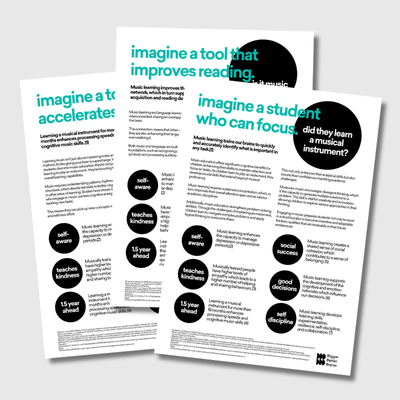
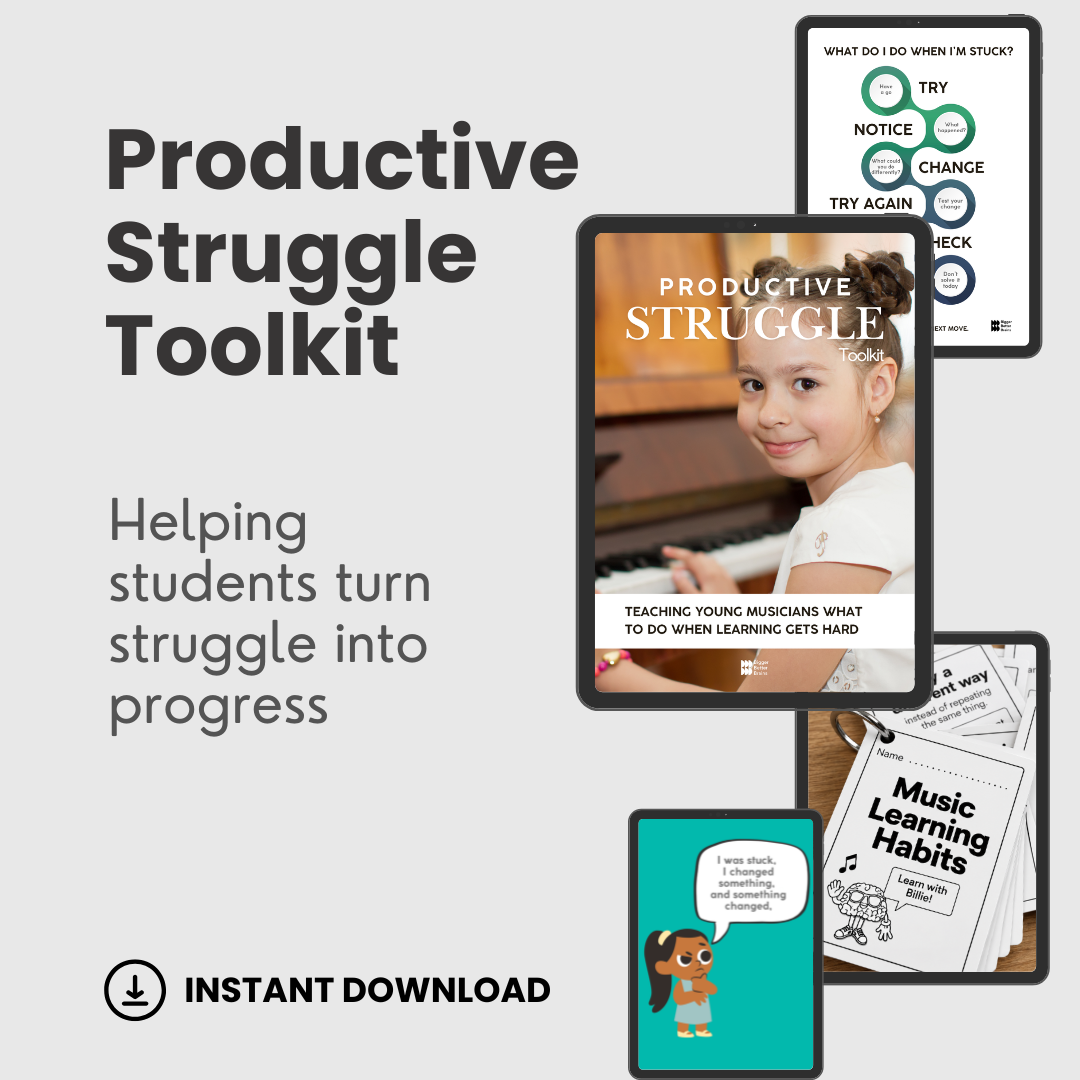
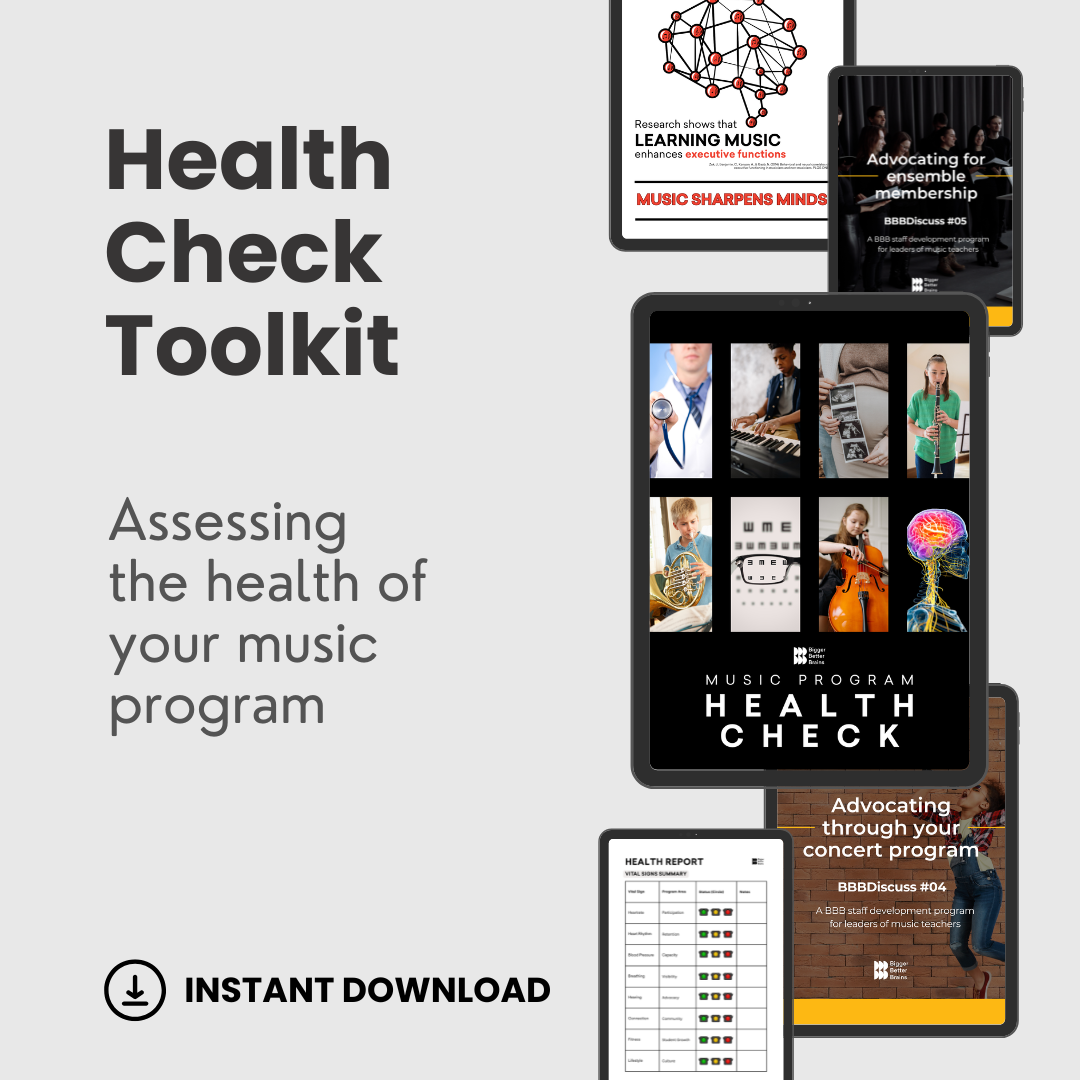
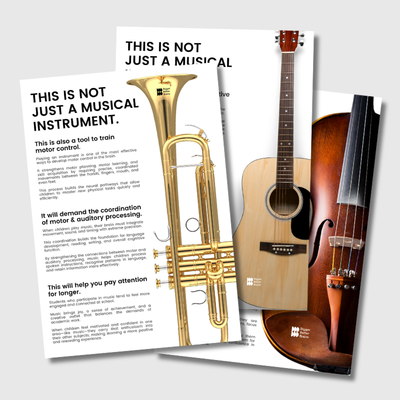

The evidence behind everything you teach, in one book
From Dr Anita Collins, music educator and creator of the TED-Ed video watched 17+ million times, translating the world's neuroscience research into the case for music education and the strategies to bring it into your teaching.
You already know music changes your students. The Music Advantage gives you the research that proves it. Because Anita explains the science through real-life stories, it reads like a good conversation rather than a textbook. Use it to advocate for your program, win over parents and leadership, and sharpen what you do in the classroom.
WHAT YOU GET
The complete book, 260 pages
Easy to read: the neuroscience explained through real classroom and family stories
Practical strategies you can apply across any age you teach, from birth to the teenage years
CHOOSE YOUR EDITION
Global edition: for readers outside the US
US edition: US terminology and examples
Signed copy: personally signed by Dr Anita Collins [while stocks last]
HOW TEACHERS USE IT
Advocacy: make the evidence-based case to school leadership for funding and keeping your program
Parent conversations: answer "is it really worth it?" with authority at enrolment and parent nights
In the classroom: practical strategies, from clapping to help a struggling reader, to ensemble play for concentration and social skills
Professional development: deepen your grasp of the "why" behind your teaching, or read it as a department
WHY IT WORKS
Written by Dr Anita Collins and grounded in research from leading neuromusical scientists worldwide, so when you make the case for music you are standing on the science, not opinion. And the real-life stories mean you will actually enjoy reading it.
"This book is my bible. I have so many highlights and pages flagged that I can use with parents and for quotes in emails." Kirsten, Music Teacher.
COMMON QUESTIONS
Which edition should I choose? Global for outside the US, US edition for US spelling and examples.
Is it a hard read? Not at all. Anita uses real-life stories to make the science clear and enjoyable.
What ages does it cover? Birth to the 18 years, useful whatever level you teach.
Add to cart NOW. Put the evidence for music behind your program today.
KEEP THE ADVOCACY GOING
BBB+ gives music teachers everything they need to make the case for music all year round:
A new advocacy toolkit every month
A library of 500+ tools and resources
Exclusive student exercises and advocacy materials
Member discounts
See what members get HERE