

Research Updates

Here at Bigger Better Brains we believe that through educating yourself, you can then educate and affect positive change in your community.
With all of the research in the field of neuromusical science, our BBB Research section serves as a content hub for you. We regularly share findings and break down the latest research to educate and inspire discussion. We hope you enjoy this page on our website and share BBB news with your colleagues, parents and students.

Teaching parents about music
There is now an enormous amount of research that has explored, measured, quantified and illuminated the benefits of music education on cognitive, emotional, social and physical development. Such is the quantity and quality of the research that it is now understood that music education benefits the development of the whole person like no other human activity.
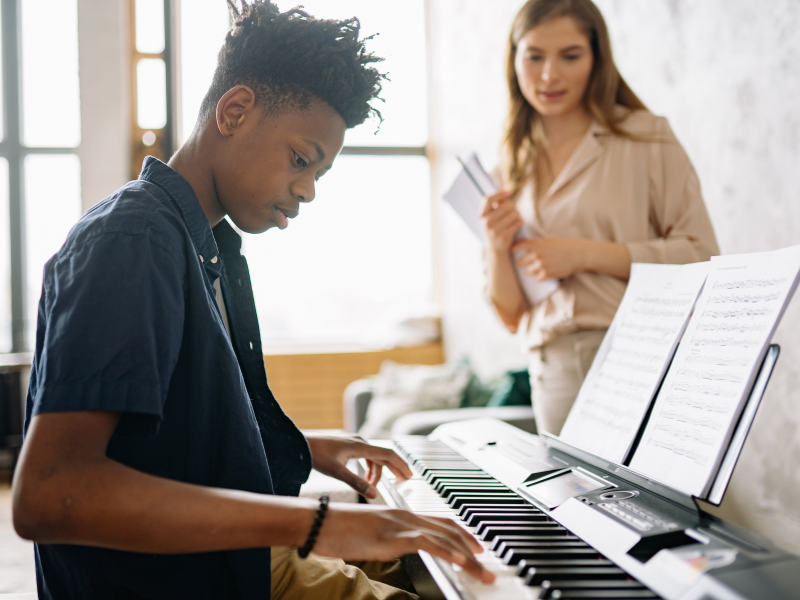
How’s your fluid intelligence?
If you’re a musically trained person, your fluid intelligence is probably highly developed! But what is fluid intelligence?

A couple of reasons why every child should have access to music education
In this study, released by Florida International University, they found that group music classes affected overall competence, confidence, caring, character and connection.

Musical play is a must for preschoolers
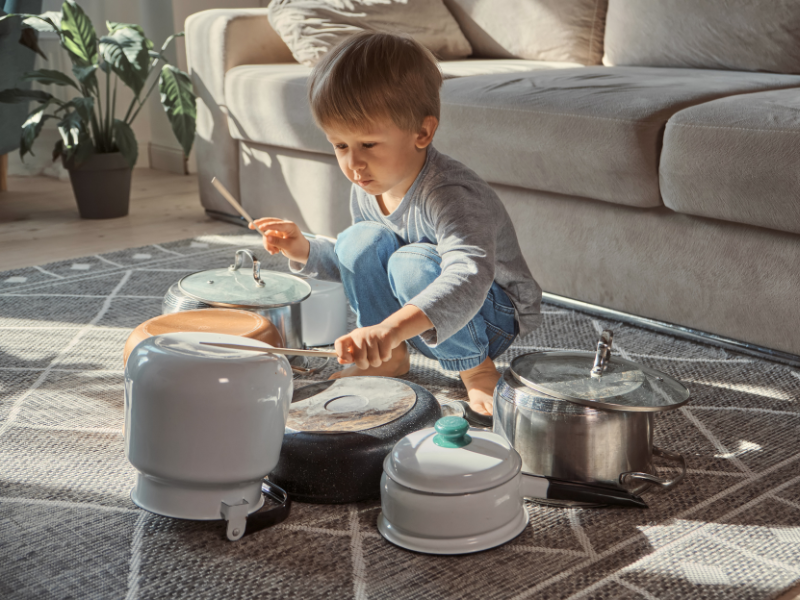
What is musical play? Is it bashing on an upturned drum in the playground or banging pots and pans on the kitchen floor? Well, it can be both.

Hitting a drum helps preschoolers gain control
To get control of our inhibitory control, preschoolers might first need to get a hold of the beat!

Dyslexia is a hearing issue, not a reading issue!
Prof Usha Goswami found that “dyslexia is not caused by children reading words incorrectly, but instead, by their inability to hear the rhythm of words when they are being spoken.”

Rhythm and dyslexia
Have you ever wondered what the connection between music and dyslexia might be? Researchers in Italy have provided a good description of the connection.

Neural Biomarkers for Dyslexia, ADHD, and ADD
The researchers built on top of the research that found that music learning could improve these “traffic black spots”. Hence, they used a music learning intervention to see if they could track changes in the auditory cortex and hemispheric activation in children with Dyslexia, ADHD and ADD.

How does our brain use rhythm to get back in sync?
It is hard to conceptualise that our brain waves can be in sync or out of sync. Yet this concept of brain wave synchronisation is fascinating to neuroscientists as they are finding that the more consistent the synchronisation, meaning the longer our brain waves can stay in sync, the more effectively we can learn.

The sounds we hear can change our brains.
Quite rightly, people who have not had exposure to music education or the impacts on children ask the question “How can one activity do so many things? The answer is that music learning is a package.
When things get noisey do your ears shut down?
Our auditory processing system is possibly our largest information-gathering sense. It keeps us safe and it processes mountains of information without our knowledge. It also never turns off. But, sometimes it gets tired and a bit overwhelmed.

A violinist, vocalist and a non-musician walk into a bar …
I am sure there is a joke in there, but as you think about what it is, you should have a look at this new study. It looked into the differences between auditory processing skills, like auditory memory, and speech in noise.




Help students turn struggle into progress
A practical toolkit that helps music teachers show students what to do when learning gets hard, so getting stuck becomes part of the learning process rather than a reason to stop.
Learning music is full of moments when things don’t work straight away. A note won’t sound right, a rhythm won’t settle, or something that worked yesterday suddenly feels difficult today.
The Productive Struggle Toolkit gives teachers, students and parents practical strategies for navigating these moments. Students learn to stay with a challenge, notice what happened, change their approach, try again and know when to come back later — building a process they can use whenever they get stuck.
WHAT YOU GET
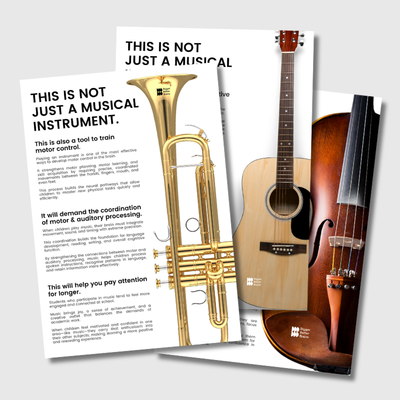
19-page Productive Struggle Book – practical guidance to help you understand productive struggle and teach students how to work through difficult learning moments.
1 Six Habits for Students Poster – a visual reminder of the productive struggle cycle and what students can do when they get stuck.
1 Printable Handout for Instrumental Teachers – practical prompts and strategies to use when students are struggling during lessons.
4 Printable Parent Handouts – help families support productive struggle at home, with practical language they can use during music practice.
7 Printable Music Learning Habits Cards – quick, student-friendly strategies students can reach for when they don’t know what to try next, including narrowing their attention, making a challenge smaller, changing their approach and slowing things down.
WHAT IT HELPS YOU DO
Give students practical strategies for what to do when they get stuck
Turn mistakes and difficult moments into opportunities for learning
Help students notice what happened before simply trying again
Teach students to make challenges smaller and more manageable
Encourage students to change their approach when something isn’t working
Build more purposeful practice habits
Give parents practical language to support music practice at home
Help students recognise that getting stuck doesn’t mean learning has stopped
HOW TO USE IT
Introduce the six Productive Struggle habits to your students, then bring them into everyday lessons and practice.
When a student gets stuck, use the prompts and activities to help them notice what happened, choose a change, test it and decide what to do next. Keep the Music Learning Habits Cards nearby so students can choose a strategy themselves, and share the parent handouts to extend the same language into home practice.
WHY IT WORKS
Students don’t just need encouragement to “keep trying.” They need strategies for how to keep learning when something feels difficult.
Productive struggle teaches students that difficulty is a normal part of music learning. Instead of repeating the same attempt or seeing being stuck as failure, students learn to notice, adjust, test and keep moving forward.
Stuck isn’t stopped. It’s about finding your next move.
COMMON QUESTIONS
What is productive struggle? It’s helping students learn how to respond when something is difficult rather than immediately giving up or relying on someone else to solve it.
Who is this toolkit for? Music teachers, instrumental teachers and parents who want practical ways to support students through challenging learning moments.
What ages can I use it with? The strategies can be adapted across different ages and stages of music learning.
How do I use the Music Learning Habits Cards? Keep them accessible during lessons or practice and encourage students to choose a card when they’re stuck. Each gives them a simple action or question to help them find their next move.
Can I share resources with parents? Yes. The toolkit includes four printable parent handouts designed to help families support productive struggle during music practice.
Is this a digital product? Yes. The toolkit is an instant download with printable resources.
Add to cart NOW. Give your students the tools to know what to do when learning gets hard.
LOVE THIS TOOLKIT? GET A BRAND-NEW ONE EVERY MONTH
This toolkit is $50 on its own. BBB+ Premium Toolkit and Premium Annual members receive a brand-new toolkit straight to their inbox free every month, plus access to over 500 evidence-based resources.
Join as a Premium Toolkit member for $60 a year, just $5 a month, and get a new toolkit every month plus the full resource library. That is less than the cost of two standalone toolkits for a whole year of support.
Want everything BBB+ offers? Premium Annual is 50% off right now.
Become a BBB+ Premium Toolkit member today CLICK HERE
Get 50% off Premium Annual CLICK HERE