

Research Updates

Here at Bigger Better Brains we believe that through educating yourself, you can then educate and affect positive change in your community.
With all of the research in the field of neuromusical science, our BBB Research section serves as a content hub for you. We regularly share findings and break down the latest research to educate and inspire discussion. We hope you enjoy this page on our website and share BBB news with your colleagues, parents and students.

$20 million is a serious investment in music as medicine
It has been widely publicised that the National Institute of Health (NIH) in the U.S. has just awarded the Sound Health Initiative $20 million over the next 5 years to look into the health and learning benefits of music and music learning.

Singing at work = better job performance
Imagine having a singing group at your work. Imagine starting the day with a song with your colleagues. What would your work culture feel like and how would you feel about going to work?

Why does music bring us pleasure?
This study shows for the first time a causal role of dopamine in musical pleasure and motivation: enjoying a piece of music, deriving pleasure from it, wanting to listen to it again, being willing to spend money for it, strongly depend on the dopamine released in our synapses.

Can music listening and performance change our genes?
Possibly! This heavy duty article highlights the recent research which has found that music listening and performance has been found to influence how genes behave or regulate themselves. The first few sentences set the scene and we have done a translation for you.

Are neuroscientists causation happy?
Prof Schellenberg compared 114 articles about music training and brain development and then analysed the titles and abstracts for the inference of causational (one action causes another) findings and correlational (a connection between two things) findings.

Are all studies created equal?
Periodically the research community completes a systematic review, sometimes known as a literature review, of a given area of research.

Musical tastes can predict personality traits and political leaning
Do you have similar musical tastes to your friends? How about your work colleagues? Do you think musical tastes tell us anything else about a person? This study thinks it might when it compared musical taste with political leaning.

Would you want to know your musical potential?
Here is one hell of a tricky question – if your musical potential, meaning your likelihood of being successful at learning music (whatever that really means) could be measured, would you want to know?

How playing the drums changes the brain
In this recent study, drummers were researched because “Most people can only perform fine motor tasks with one hand and have problems playing different rhythms with both hands at the same time,” but, “Drummers can do things that are impossible for untrained people.”

What happens when one twin practises and the other doesn’t?
Talk about a great experiment. Researchers in Sweden surveyed 83 sets of monozygotic (identical) twins to find 10 pairs who fit the following criteria – only one sibling in each pair currently played a keyboard instrument (piano, organ, keyboard) and within the pair, a difference in total hours of music practice was at least 1000 hours.

Music Learning Helps Learning Difficulties
The ‘Music Learning Helps Learning Difficulties’ series consists of three information documents to provide you with the research behind how music learning helps a particular area of learning.

Why studying music and the brain is so fascinating, and so difficult
Studying how the brain processes music and how music changes the brain has fascinated neuroscientists for almost 30 years. But these two types of studies, how the brain processes music and how music changes the brain, are also very difficult.


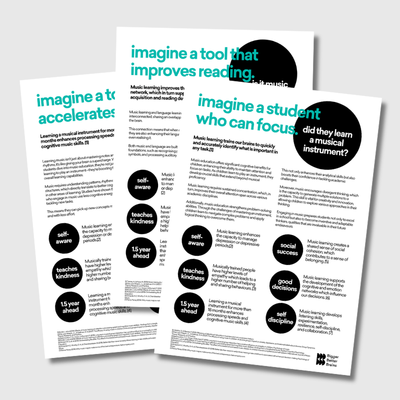
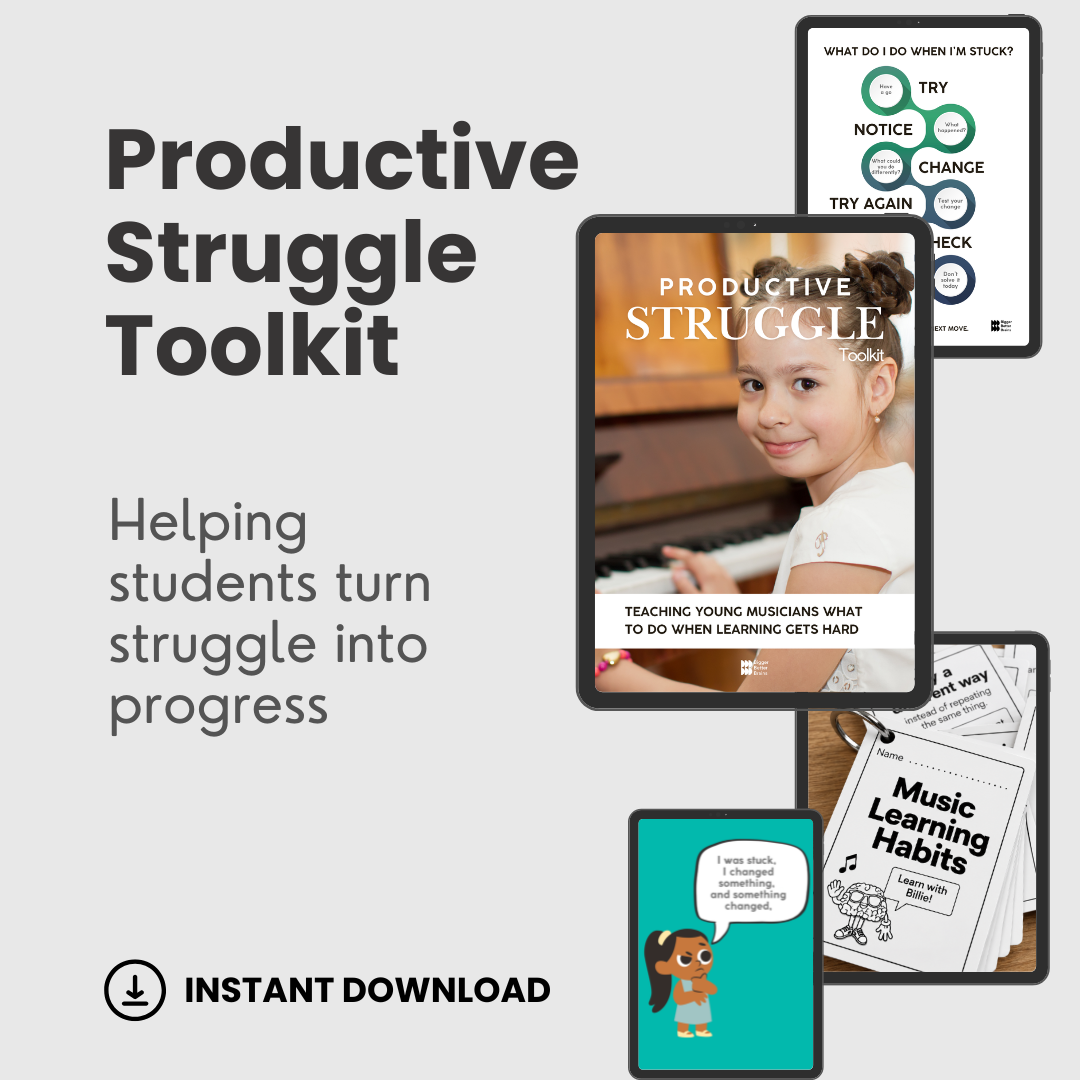
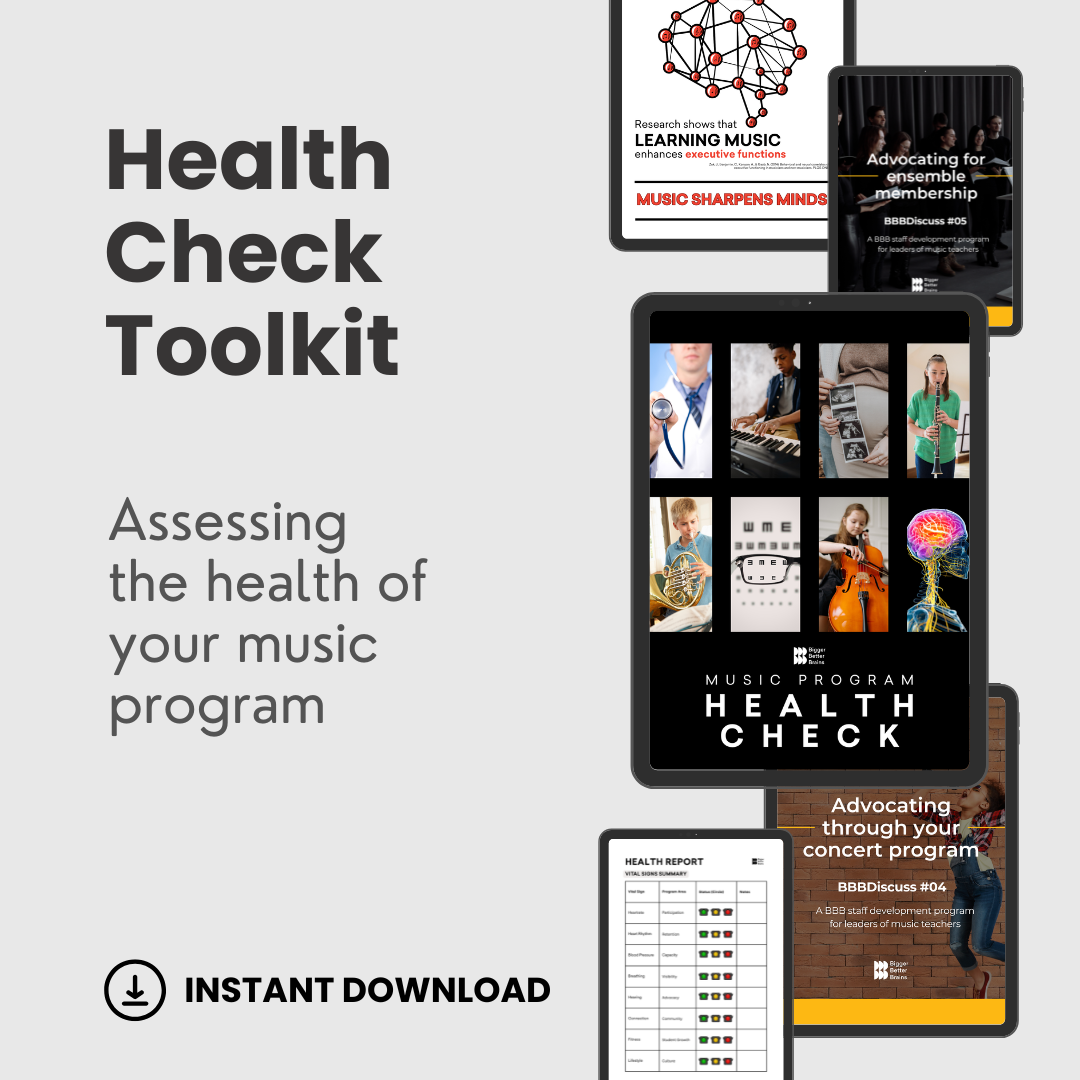
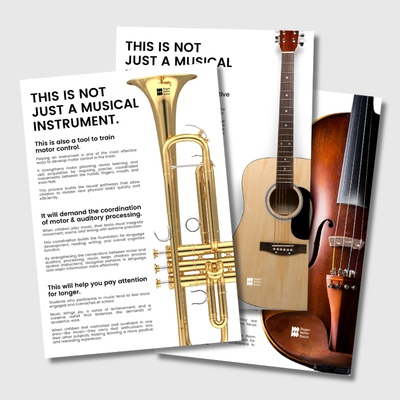

The evidence behind everything you teach, in one book
From Dr Anita Collins, music educator and creator of the TED-Ed video watched 17+ million times, translating the world's neuroscience research into the case for music education and the strategies to bring it into your teaching.
You already know music changes your students. The Music Advantage gives you the research that proves it. Because Anita explains the science through real-life stories, it reads like a good conversation rather than a textbook. Use it to advocate for your program, win over parents and leadership, and sharpen what you do in the classroom.
WHAT YOU GET
The complete book, 260 pages
Easy to read: the neuroscience explained through real classroom and family stories
Practical strategies you can apply across any age you teach, from birth to the teenage years
CHOOSE YOUR EDITION
Global edition: for readers outside the US
US edition: US terminology and examples
Signed copy: personally signed by Dr Anita Collins [while stocks last]
HOW TEACHERS USE IT
Advocacy: make the evidence-based case to school leadership for funding and keeping your program
Parent conversations: answer "is it really worth it?" with authority at enrolment and parent nights
In the classroom: practical strategies, from clapping to help a struggling reader, to ensemble play for concentration and social skills
Professional development: deepen your grasp of the "why" behind your teaching, or read it as a department
WHY IT WORKS
Written by Dr Anita Collins and grounded in research from leading neuromusical scientists worldwide, so when you make the case for music you are standing on the science, not opinion. And the real-life stories mean you will actually enjoy reading it.
"This book is my bible. I have so many highlights and pages flagged that I can use with parents and for quotes in emails." Kirsten, Music Teacher.
COMMON QUESTIONS
Which edition should I choose? Global for outside the US, US edition for US spelling and examples.
Is it a hard read? Not at all. Anita uses real-life stories to make the science clear and enjoyable.
What ages does it cover? Birth to the 18 years, useful whatever level you teach.
Add to cart NOW. Put the evidence for music behind your program today.
KEEP THE ADVOCACY GOING
BBB+ gives music teachers everything they need to make the case for music all year round:
A new advocacy toolkit every month
A library of 500+ tools and resources
Exclusive student exercises and advocacy materials
Member discounts
See what members get HERE